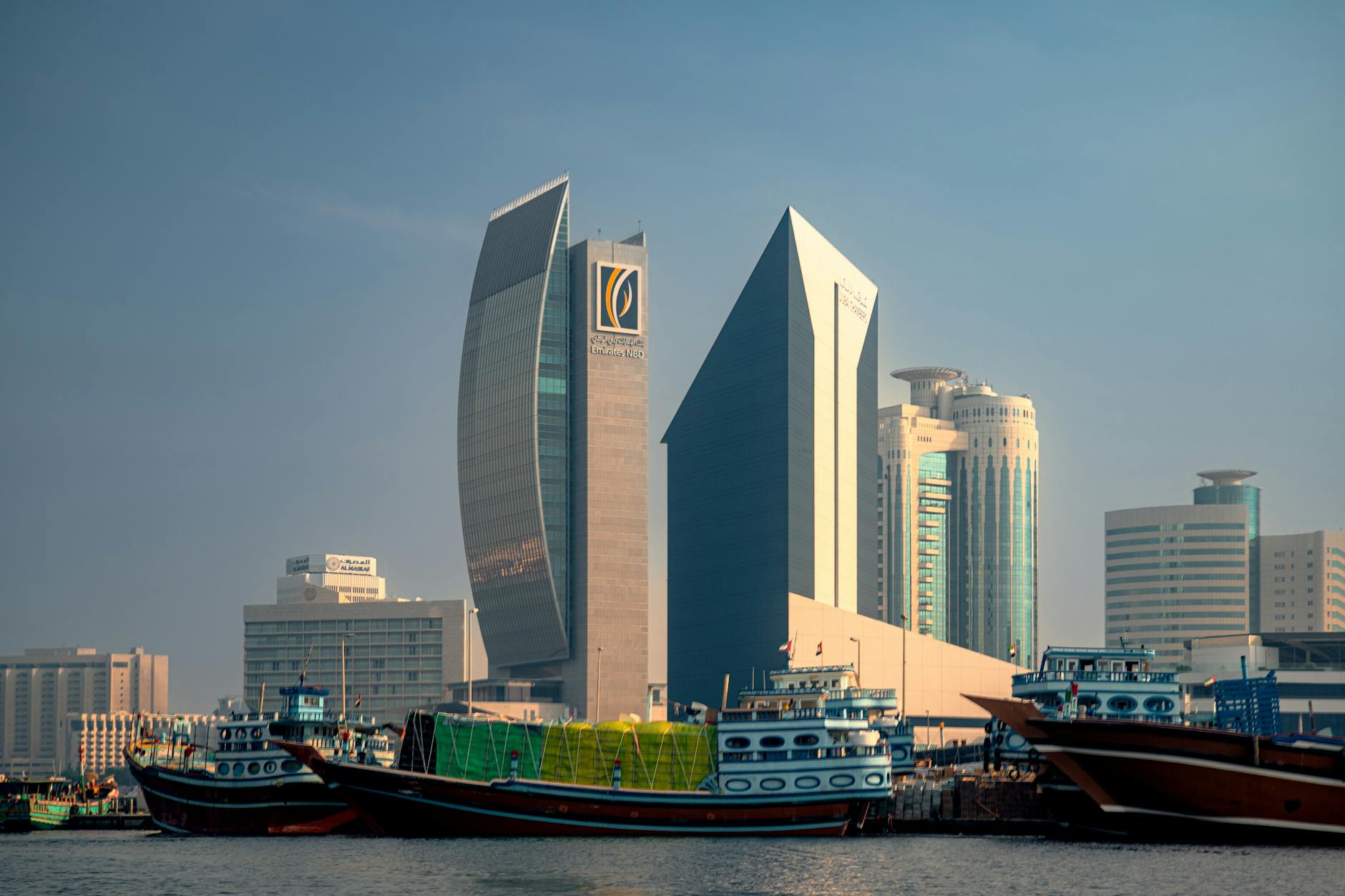
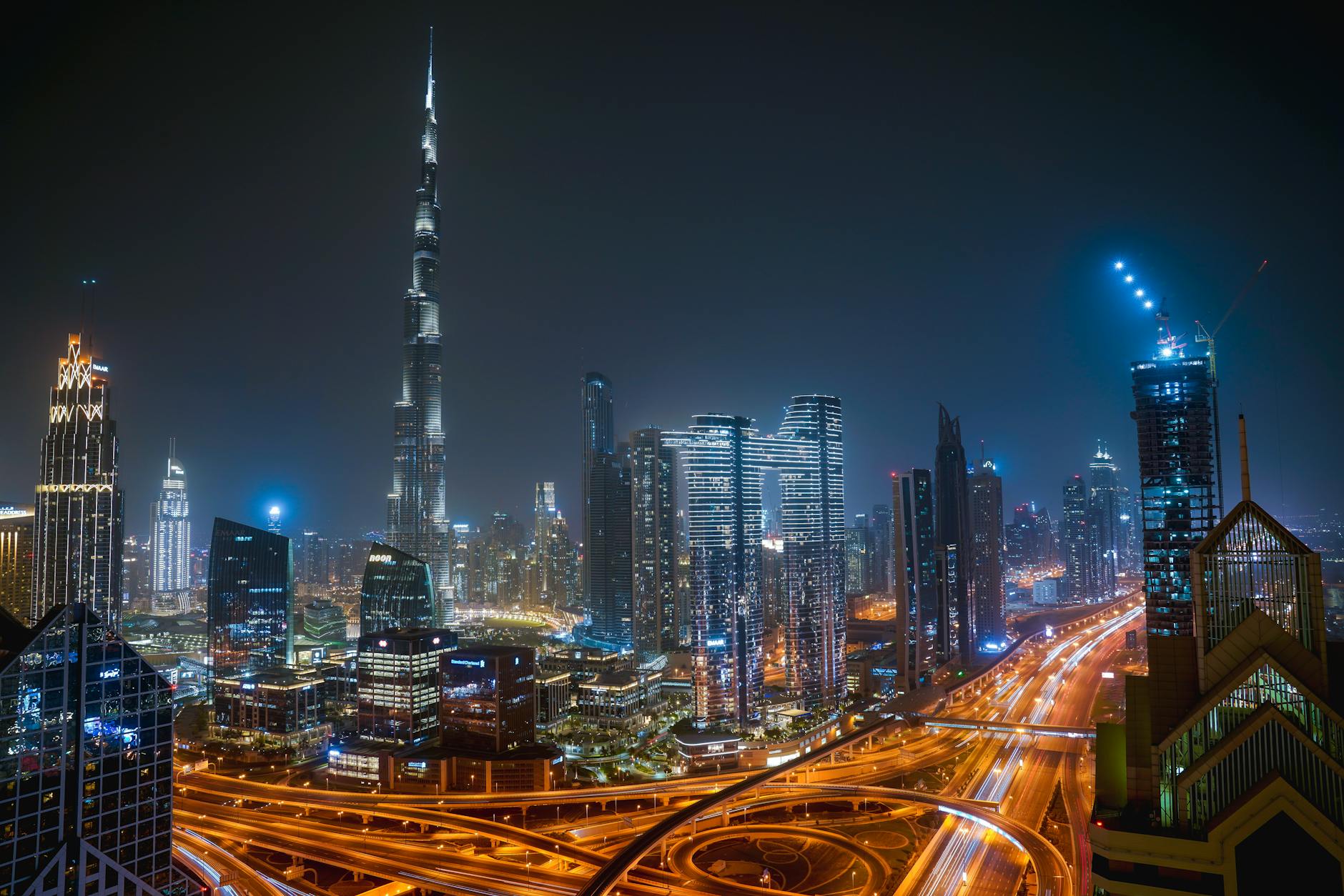
The numbers from last week's trading sessions across the GCC's two most watched equity markets tell a story that goes well beyond a routine weekly summary. Saudi Arabia's Tadawul posted total trading value of 1.72 billion riyals across the week. The Dubai Financial Market recorded 6.7 billion dirhams in domestic equity turnover. And within that Dubai figure sits the detail that matters most: five stocks accounted for 55 percent of the entire week's trading value on the DFM. That single statistic is not a curiosity. It is a structural diagnosis.

Start with the concentration problem in Dubai. A market where five names absorb more than half of all weekly turnover is not a broad-based equity market in any functional sense. It is a market with a liquid core and an illiquid periphery, and the two operate under entirely different conditions. The names that consistently dominate DFM volume are well known: Emaar Properties, Emirates NBD, Dubai Islamic Bank, and a rotating cast of financial sector heavyweights that between them represent the commanding heights of the emirate's listed economy.

Al Rajhi Bank topped the GCC's most-traded list with $6.9 billion in trading value over a recent period, followed by Saudi Aramco and Emaar Properties at roughly $6 billion each, illustrating how the same handful of names absorb liquidity across the region's exchanges week after week. When five stocks capture 55 percent of a single market's weekly turnover, the 60-plus remaining listed companies on the DFM are effectively trading in a different market, one where bid-ask spreads are wider, price discovery is slower, and institutional exit is structurally harder.

The Tadawul figure of 1.72 billion riyals for the week demands its own context.

The Saudi Exchange is the largest stock market in the Middle East and North Africa by market capitalization, with a total market cap exceeding $2.7 trillion and over 400 listed companies.

Against that scale, a weekly trading value of 1.72 billion riyals is modest. The broader trend confirms the compression.

A 30 percent drop in Saudi market trading to $346.5 billion in 2025 from $496.6 billion in 2024 represents a structural retreat in activity, not a temporary dip.

The decline was driven by weak liquidity, declining trading volumes, falling oil prices that negatively affected energy and petrochemical companies, numerous IPOs, and global and regional geopolitical tensions.

Each of those factors compounds the others. A market where oil-linked names dominate the index weight will shed retail participation precisely when crude softens, and the IPO pipeline, rather than deepening the market, has in practice fragmented attention and diluted liquidity across a larger number of names.

💡 Insight

The divergence between the two markets is itself instructive.

In terms of market capitalization, Tadawul remains dominated by a relatively small number of government-related entities, and market liquidity as measured by trading volumes remains relatively low. Foreign investors' holdings on Tadawul continue to rise but remain low at about 4.2 percent of the market, or about 11 percent of the free float as of year-end 2024.

That foreign ownership figure is the key variable. A market where international institutional participation is structurally thin will always be more susceptible to domestic sentiment swings and retail withdrawal. When retail investors pull back, as they have done through 2025 and into 2026, there is insufficient institutional depth to absorb the volume gap.

The divergence between the two markets is itself instructive. Dubai's 6.7 billion dirhams in weekly domestic equity turnover represents a market that has attracted foreign inflows and maintained activity even as Tadawul volumes compressed.

Trading activity on Gulf bourses diverged in the first nine months of 2025 as investors bet on Kuwaiti stocks and Dubai attracted additional foreign inflows, while Saudi Arabian equities lost their lustre.

The mechanism behind Dubai's relative resilience is partly structural. The DFM's largest constituents, particularly Emaar, carry direct exposure to a property market that has remained active through 2025, giving the exchange a real-economy anchor that Tadawul's energy-heavy composition does not provide in a low-oil-price environment.

But Dubai's concentration problem is the shadow side of that resilience. A market that holds its aggregate volume through the performance of five names is not a healthy market. It is a market where the illusion of liquidity masks a fragile underlying structure. If any two of those five dominant names were to face a simultaneous earnings disappointment or a sector-level shock, the DFM's weekly turnover figure would collapse in a way that the headline number gives no warning of.

For the first half of 2026, foreign investors recorded net buying of $1.2 billion across the GCC, though this represented an 83.1 percent year-on-year decline compared with the first half of 2025.

That figure captures the broader condition of both markets simultaneously. Foreign capital is still present but it is retreating, and what remains is increasingly selective, concentrating in the same large-cap names that already dominate weekly turnover. The result is a self-reinforcing loop: concentration drives liquidity toward the top names, which attracts the remaining foreign flows, which deepens concentration further.

Saudi Arabia's ongoing initiatives to improve market liquidity and increase foreign shareholdings on Tadawul, including a new investment law and pension fund reforms, are designed to grow portfolio inflows.

Those reforms are real and their direction is correct. But the weekly trading data is a reminder that structural liquidity does not respond to policy announcements on a short timeline. It responds to sustained earnings growth, a broadening of the investable universe, and the slow accumulation of institutional confidence. One week of 1.72 billion riyals on Tadawul and five stocks absorbing 55 percent of DFM volume is not a crisis. It is a measurement. And what it measures is how much work remains.


For informational and research purposes only. Not a solicitation. Consult a licensed financial advisor before making any investment decision.