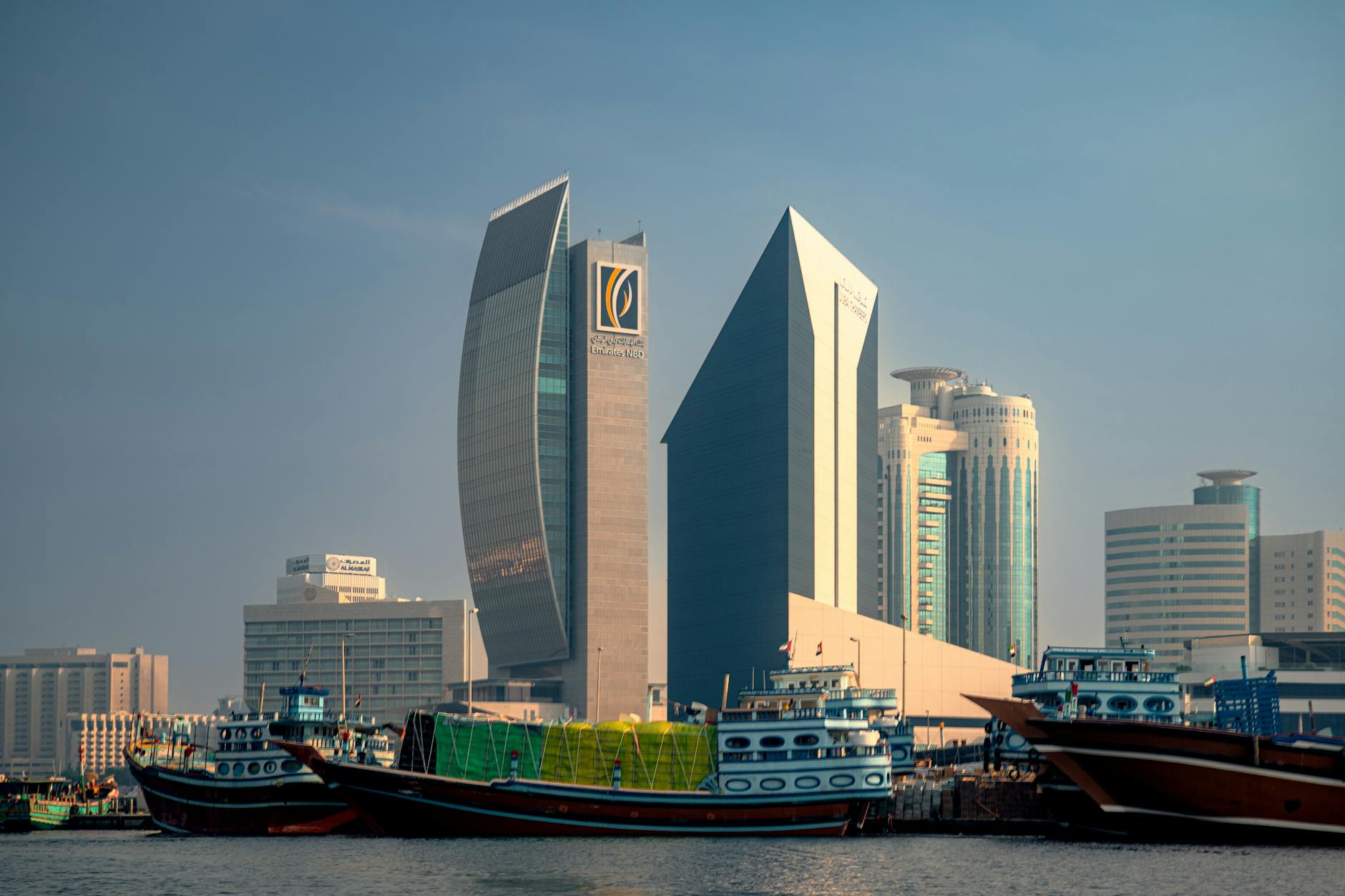
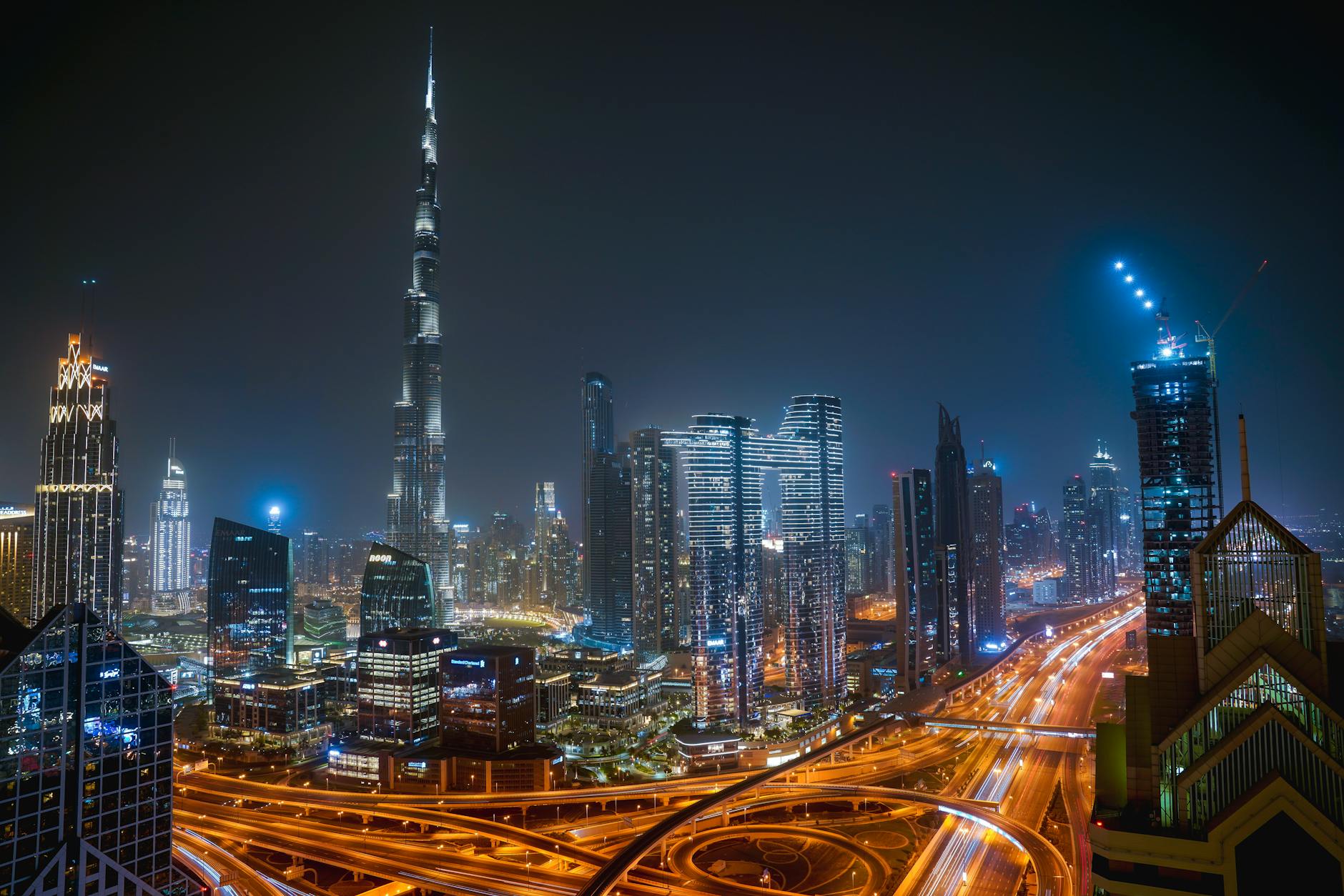
The affordable apartment segment faces genuine oversupply risk, particularly in areas like JVC, International City, and Dubai Silicon Oasis, with price corrections of 5 to 10 percent possible in saturated developments and rental yield compression toward 6 to 7 percent from current levels of 8 to 9 percent.
The risk is not market-wide.
Supply risk in 2026 is primarily an apartment-density story, concentrated in specific corridors, affecting a specific price band.
Waterfront and ultra-prime locations carry a different profile entirely.
Palm Jumeirah, Emaar Beachfront, and Dubai Creek Harbour face supply constrained by geography, and demand is driven by a global buyer pool that is less sensitive to local mid-market dynamics.
The bifurcation between these two segments is the defining structural feature of the UAE market entering 2026, and any UAE property market analysis 2025 that treats the emirate as a single homogenous asset class will produce the wrong conclusions.
Across the Gulf, Saudi Arabia is running a different cycle entirely, one where the supply question is not about developer pipelines but about the pace at which Vision 2030 transforms undeveloped land into functioning real estate markets.
The value of contracts awarded by Saudi Arabia's giga-projects jumped 20 percent in 2025, reaching $196 billion, as the Kingdom accelerates development across real estate, infrastructure, and tourism.
The Saudi giga projects real estate impact is not abstract.
Projects worth more than $237 billion have been announced across real estate, infrastructure, and transport since 2016, with $44 billion already awarded in construction contracts, supporting Riyadh's population growth from 7 million in 2022 to a projected 10.1 million by 2030, requiring more than 340,000 new homes.
The Saudi Vision 2030 real estate impact is now measurable at the transaction level.
Saudi Arabia's real GDP grew by 3.9 percent year-on-year in Q2 2025, with the non-oil sector now contributing 56 percent of total GDP.
Riyadh holds a 41.5 percent share of the Saudi real estate market in 2025, tracking a 7.0 percent compound annual growth rate to 2031 as New Murabba and King Abdullah Financial District reshape the skyline.
Private capital is following the state.
Saudi Arabia's residential real estate sector is set to attract SAR 4.58 billion in private investment in 2025, driven by the Kingdom's giga-projects, according to Knight Frank and YouGov.
SAR 2.75 billion of that private capital is ready for deployment into large-scale real estate projects, with Saudi nationals contributing SAR 2.62 billion and expatriates SAR 133.7 million.
The policy environment is shifting to match that capital appetite.
A new ownership law for non-Saudis, announced in July 2025 and effective from January 2026, opens the market to foreign investors, aligning with Saudi Arabia's ambition to attract $100 billion in annual foreign direct investment by 2030.
That reform, combined with an expanded white land tax designed to push idle landholders toward development, represents a structural reconfiguration of who can participate in the Saudi market and on what terms. The Saudi giga projects real estate impact and the Saudi Vision 2030 real estate impact are now converging in a single policy moment that has no precedent in the Kingdom's property history.
The two markets present GCC investors with genuinely different risk and return profiles. The UAE offers liquidity, price transparency, and a mortgage market that is deepening, but the mid-market apartment segment in Dubai carries measurable supply risk through 2027 that headline transaction figures do not capture. Saudi Arabia offers scale, state-backed demand, and a reform trajectory that is opening previously closed capital pools, but the market is earlier in its institutional development and project execution timelines carry their own uncertainty.
The Saudi Arabia real estate market is projected to expand from USD 74.11 billion in 2025 to USD 113.96 billion by 2031, registering a compound annual growth rate of 7.58 percent.
That trajectory is real, but it is contingent on delivery, absorption, and the continued alignment of government spending with announced timelines. The numbers in both markets are large enough to obscure the fault lines. The fault lines are where the analysis has to begin.
For informational and research purposes only. Not a solicitation or offer. Consult a licensed financial advisor before making any investment decision.