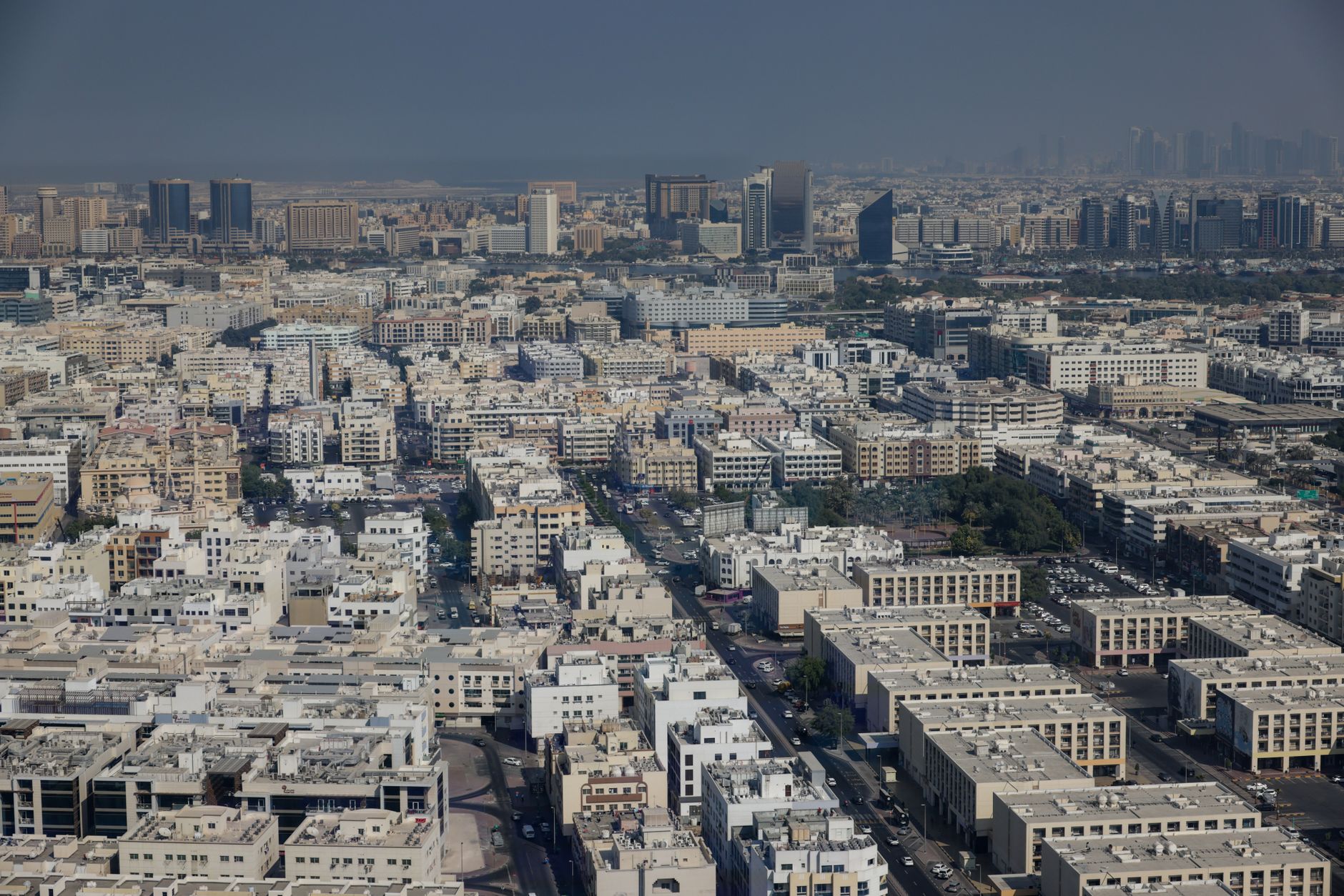
DP World reported first-half 2026 revenue of $12.7 billion, up 13.1 percent year-on-year, as growth across its global logistics and ports network helped offset lower activity at Jebel Ali.
Excluding Jebel Ali, container volumes increased 6.5 percent on a like-for-like basis, with growth across Africa, Asia Pacific, Europe, and the Americas.
This is the company's global diversification doing exactly what it was designed to do. The problem is that diversification absorbs volume but cannot fully replace margin, and the profitability compression tells that story clearly.
Adjusted EBITDA fell 5.6 percent to $2.86 billion from $3.03 billion a year earlier, while gross container throughput declined 5.7 percent to 42.8 million TEU.
The response has been swift and structurally significant.
DP World reached an agreement in principle with the Fujairah Ports Authority to develop two terminals on the UAE's east coast under a 50-year concession, which would provide an alternative corridor for cargo flows, reducing reliance on Jebel Ali.
This series of actions shows that Gulf states are transforming the geopolitical risk of the Strait of Hormuz into a driving force for the long-term restructuring of port, pipeline, and land transport infrastructure.
That reframing is important. What looks like crisis management in the short term is, when viewed through the longer lens, an acceleration of infrastructure diversification that the UAE has been contemplating for years. The Strait has always been a single point of failure. The conflict has simply forced the timeline.
The trade disruption does not stop at the port gate. It travels upstream into the cost structures of every business that imports through the Gulf, and it is arriving at a moment when Saudi Arabia's wholesale price dynamics were already signaling upstream pressure.
The annual rate of the Wholesale Price Index in Saudi Arabia reached 3.3 percent in March 2026 compared to the same month in 2025.
That figure deserves careful attention, because the WPI is not a consumer-facing measure.
The Wholesale Price Index measures the price movements of goods at pre-retail stages, based on a fixed basket of 343 items.
It is the leading indicator, the upstream signal that tells you what retailers will face before consumers feel it. And the trajectory over the past several quarters has been consistently upward, moving from 2.1 percent in mid-2025 through 2.9 percent in October, 3.1 percent in December, and 3.3 percent by March 2026. A trend that persistent across that many sequential readings is not noise. It is a pipeline.
The consumer price index has remained relatively contained,
with the annual inflation rate of the CPI in Saudi Arabia reaching 1.9 percent in March 2026 compared with March 2025.
But the spread between wholesale and consumer inflation is narrowing, and the direction of that convergence is not favorable for household budgets. When shipping costs rise because Hormuz is functionally closed, when import-dependent supply chains lengthen and re-route through more expensive corridors, the cost eventually finds its way to the shelf. The question is not whether it will, but when and in which categories first.
Against this backdrop, the Saudi market's aggregate earnings picture for Q4 2025 adds another layer of complexity.
Quarterly net profits reported by companies listed on GCC exchanges witnessed a sharp sequential decline and reached the lowest level in 12 quarters during Q4 2025, with aggregate profits declining by 24.7 percent quarter-on-quarter to reach $49.4 billion.
Saudi-listed companies posted a year-on-year profit decline of 34.6 percent to reach $22.8 billion.
Strip out Aramco, as the market convention demands when trying to read the health of the non-oil economy, and the SAR 16.40 billion aggregate figure for Q4 2025 reflects a corporate sector that entered 2026 already carrying the weight of compressed margins, higher input costs, and a geopolitical environment that had not yet fully materialized into the supply shock now visible in DP World's results.
The more constructive signal comes from Q1 2026, where the non-Aramco recovery was meaningful.
Excluding Saudi Aramco, aggregate profits increased by 13 percent year-on-year to reach SAR 46.3 billion, mainly driven by the banking, petrochemicals, and energy sectors.
Banks, which have been the structural beneficiaries of the Vision 2030 credit expansion cycle, continued to anchor the non-oil earnings base. But that recovery was reported before the full weight of the Hormuz disruption had settled into logistics costs and import price indices.
The pattern that emerges from assembling these data points is not one of isolated shocks. It is a picture of a consumer economy navigating three simultaneous pressures: a geopolitical disruption to its primary trade artery, a wholesale cost pipeline that has been building for several quarters, and a corporate earnings cycle that softened materially in the final quarter of 2025 before recovering partially in early 2026. Each of those pressures is manageable in isolation. Together, and arriving in the same window, they ask more of the consumer than any single data point reveals.
The GCC consumer has absorbed structural price adjustments before. The VAT introductions of 2018 and 2020, the subsidy reforms that reshaped household energy and fuel costs, the Red Sea disruptions of 2023 and 2024 — each episode produced a period of spending caution followed by a resumption of consumption growth anchored in the region's young demographic base and rising female workforce participation. The question this cycle poses is whether the recovery cadence will hold when the upstream pressure is arriving not from a policy decision but from a geopolitical disruption with no clear resolution timeline.
Periodic Iranian attacks against shipping and retaliatory U.S. strikes against Iran have severely disrupted traffic through the Strait for most of the past five months.
That duration matters. A two-week disruption is absorbed. A five-month disruption begins