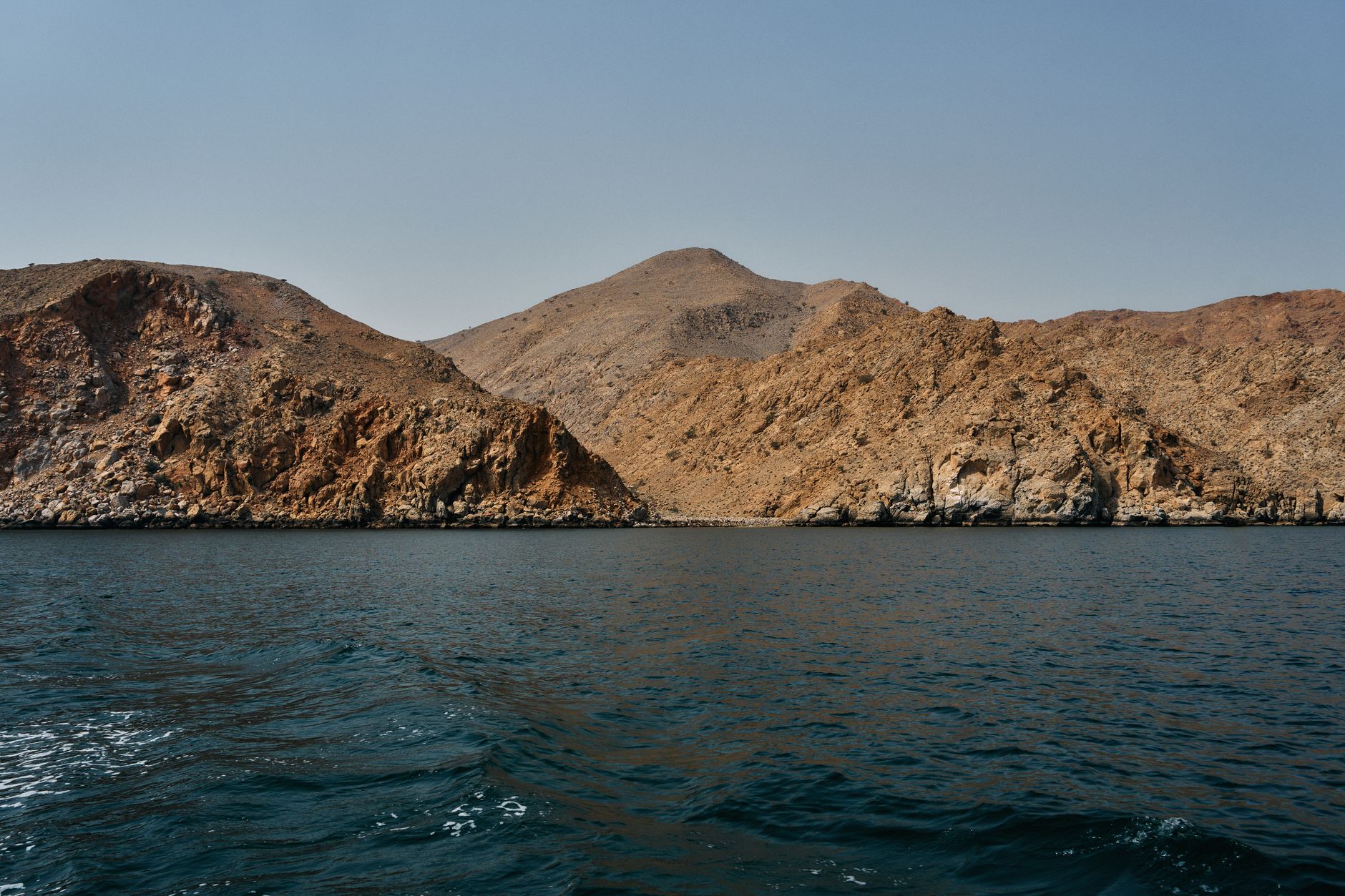
The Strait of Hormuz is approximately 33 kilometres wide at its narrowest navigable point. That physical fact, unremarkable in peacetime, became the organizing principle of Saudi Arabia's petrochemical earnings in the first half of 2026. The results that have emerged from Tadawul over the past several weeks do not tell a single story about the sector. They tell two stories, separated by a coastline.

Geography shaped the second-quarter earnings of Saudi Arabia's petrochemicals industry in ways that analysts are still working through. West-coast producers, unaffected by the near-closure of the Strait of Hormuz, thrived on higher product prices and easier exports via the Red Sea.

East-coast producers, whose logistics chains run through the Gulf and out through Hormuz, faced a structurally different operating environment. The divergence in outcomes was not a function of management quality or product mix alone. It was a function of where the plant sits on the map.

Net profit at Yanbu National Petrochemical Company, majority owned by SABIC, jumped fourfold between January and June. Yet two of the biggest Saudi-listed petrochemical companies swung to losses in the first half of 2026, as lower sales and the Iran war disrupted global supply chains.

Yansab's Yanbu complex sits on the Red Sea. Its ethylene and polyethylene move through Jeddah Islamic Port and into Mediterranean and European trade lanes without touching the Gulf.

Yanbu hosts Yanpet, a joint venture with ExxonMobil, and Yansab itself, with combined ethylene capacity exceeding 1.6 million metric tonnes per year.

That capacity, built over decades to serve a western export corridor, became a structural advantage the moment the eastern corridor tightened.

The contrast with the Gulf-coast producers is stark.

Sahara International Petrochemical Company posted a net loss of SAR 807 million for the first six months, compared with a net profit of SAR 26 million a year earlier. Revenue fell 46 percent year on year to SAR 2.1 billion, as supply-chain disruptions led to a build-up of unsold inventory.

Inventory accumulation is the physical signature of a logistics blockage. Product that cannot reach its buyer does not disappear from the balance sheet. It sits in tanks and warehouses, consuming working capital and generating no revenue.

Advanced Petrochemical Company also reported a net loss for the half-year, at SAR 69 million, compared with a net profit of SAR 153 million a year earlier. The decline was driven mainly by surging propane and propylene purchase prices.

Advanced is a propane dehydrogenation producer, which means its feedstock arrives by purchase rather than by pipeline from an integrated refinery. When propane markets tighten, its cost structure tightens with them, and there is no upstream buffer to absorb the pressure.

SABIC itself, the sector's anchor, reported a second-quarter net loss of SAR 830 million.

In the first quarter, SABIC had reported an adjusted EBITDA of SAR 4.15 billion, an increase of 25 percent compared to Q4 2025.

The sequential deterioration from that position into a Q2 loss illustrates how quickly the Hormuz disruption transmitted through the physical supply chain into financial results.

💡 Insight

The Musandam location is particularly notable.

The company is following through on agreements to divest its European Petrochemicals business and its Engineering Thermoplastics business in the Americas and Europe, actions aligned with its strategy to enhance capital allocation and strengthen financial resilience.

The timing of those divestitures, announced before the Hormuz disruption intensified, now reads as inadvertent preparation for a period when the core Saudi production base needed to be the focus of management attention.

The aggregate picture across the sector is one of bifurcation rather than uniform decline.

SABIC Agri-Nutrients recorded the highest profits in the sector in the first quarter, with earnings rising 24.57 percent to SAR 1.23 billion, a result the company attributed to higher average selling prices for most of its products.

Fertilizer molecules, unlike polymers, move in bulk vessels to agricultural markets that are less sensitive to the specific logistics corridors affected by the Gulf disruption. That insulation from the Hormuz effect is worth noting as investors assess which parts of the Saudi chemicals complex carry the least geopolitical exposure.

Against this backdrop, Oman's industrial buildout takes on a significance that extends beyond the Sultanate's own diversification ambitions.

Oman's Public Establishment for Industrial Estates, Madayn, is moving ahead with plans to establish four new industrial cities across the Sultanate as part of the 2026 to 2030 five-year development plan, with locations in Al Suwaiq in North Al Batinah, Al Mudhaibi in North Al Sharqiyah, Thumrait in Dhofar, and Mudhaffar in Musandam.

The Musandam location is particularly notable. Musandam is the Omani exclave that forms the southern shore of the Strait of Hormuz itself. Industrial development there, even at an early stage, signals an awareness that the strait is not merely a transit route but a geographic asset that can anchor logistics and processing activity.

Madayn plans to invest more than RO 245 million, equivalent to approximately $637 million, in infrastructure and development projects across the Sultanate's industrial cities between 2026 and 2030.

The programme includes about 90 strategic projects focused on infrastructure upgrades, industrial city expansion, and improvements to the business environment.

Among the strategic quality projects Madayn aims to attract is an Integrated Economic Cluster for the mining sector and a 97 MW solar PV farm in Suhar Industrial City.

The mining cluster is worth watching. Oman holds chromite, copper, and limestone reserves that remain underexploited relative to their scale, and an integrated industrial estate framework with power infrastructure and logistics connectivity is precisely the kind of enabling environment that can shift a mineral deposit from a geological fact into a production asset.

Madayn's targets for 2030 include increasing private investments in the industrial cities from RO 7.78 billion in 2025 to RO 8.6 billion, raising exports from industrial cities from RO 3.79 billion to RO 4.3 billion, and increasing renewable energy consumption from zero to 15 percent of total use.

The renewable energy target matters for the chemicals and materials sector specifically. Energy cost is the primary variable in the economics of energy-intensive industries such as aluminum smelting, chlor-alkali production, and ammonia synthesis. A credible pathway to low-cost renewable power changes the investment calculus for any producer evaluating where to locate new capacity in the Gulf region.

The first half of 2026 has made one thing clear across the GCC materials sector: the physical geography of production and logistics is not a background condition. It is the primary variable. Saudi producers whose plants face west are reporting profits. Those whose plants face east are reporting losses. Oman is building industrial infrastructure at the strait itself. The market is pricing geography, and the supply chain is teaching the lesson that maps always knew.


For informational and research purposes only. Not a solicitation. Consult a licensed financial advisor before making any investment decision.