Musandam's Upgraded Fishing Sites: Infrastructure as the First Link in Oman's Seafood Supply Chain

Disclaimer
This article represents the analyst's views. For informational purposes only. Not investment advice, a solicitation, or a recommendation. Consult a licensed financial advisor before making any investment decision.
The physical geography of Musandam has always made it an awkward place to do business. The governorate sits at the northern tip of the Arabian Peninsula, separated from the Omani mainland by the territory of the United Arab Emirates, and it faces the Strait of Hormuz across waters that carry roughly a fifth of the world's traded oil. Its fjords are among the most productive fishing grounds in the Gulf, sheltering grouper, trevally, emperor, and a range of premium demersal species that command strong prices in regional markets. Yet for decades the infrastructure connecting those fish stocks to buyers was thin, informal, and inefficient. That is now changing in a measurable and deliberate way.
The Ministry of Agriculture, Fisheries and Water Resources has completed the construction work for the marine area rehabilitation project in Musandam Governorate, covering several coastal areas across the Wilayats of Dibba and Khasab, as well as the Niyabat of Lima.
The physical scope of the work is specific enough to be analytically meaningful.
The infrastructure development included the construction of 12 fixed docks, with seven built in the marine areas of the Wilayat of Dibba and five in the Wilayat of Khasab, while the project also delivered 11 shelters across various coastal sites in Khasab to protect fishermen and their equipment.
These are not headline-grabbing numbers, but they are the kind of numbers that matter in a supply chain analysis. Fixed docking infrastructure is the first physical intervention that converts an artisanal catch into a tradeable commodity. Without it, fish move through informal channels, quality degrades during handling, and the premium that Musandam's species command in export markets is never captured.
These sites serve as critical infrastructure, linking fishing operations with production and marketing, and forming the foundation for efficient seafood supply chains.
The ministry has also moved to open the next layer of the chain to private capital.
💡 Insight
The Ministry of Agriculture, Fisheries and Water Resources has completed the construction work for the marine area rehabilitation project in Musandam Governorate, covering several coastal areas across the Wilayats of Dibba and Khasab, as well as the Niyabat of Lima..
The ministry has recently offered investment opportunities for the establishment, management, and operation of the Ghumda and Al Jari landing sites, an initiative that aligns with Oman Vision 2040's emphasis on public-private partnerships to achieve sustainable development and enhance environmental and economic sustainability.
The decision to offer operational management of landing sites to the private sector is a structural one. It signals that the government intends to build the physical backbone of the supply chain with public funds and then hand the commercial operation to investors who have an incentive to maximize throughput and quality.
The port infrastructure picture in Musandam is broader than the landing sites alone.
Dibba Port in Musandam has reached an 80% completion rate, positioning it as Oman's second-largest multi-purpose port after Duqm, while other ports including Lima, Kumzar, Raysut, and Shannah are being developed to enhance marine industries and create new business and job opportunities.
Dibba's strategic value is compounded by its proximity to the Strait of Hormuz and the UAE market. A port at that location, capable of handling multi-purpose cargo, is not merely a fisheries asset. It is a logistics node with access to the densest concentration of seafood consumers in the GCC.
Fishing harbours have been added in Bukha, while the government is also studying investment options to transform Khasab Port into a commercial hub, alongside upgrades to the harbours in Lima and Kumzar.
The vessel-side of the supply chain is also being addressed.
A new shipbuilding dry dock in Musandam will serve regional markets and give local fishermen easier access to GCC markets, with Musandam Global Investment Company, a Turkish and Omani joint venture, set to build the shipbuilding and marine repair facilities by the second quarter of 2027. The first phase, at a cost of $15 million, will include a fishing vessel construction yard, while the second phase will focus on cargo ships and marine repair facilities at a cost of $20 million.
The logic here is straightforward. A fishing fleet that can be built and maintained locally operates at lower cost and with less downtime than one dependent on distant repair yards. Lower operating costs translate directly into margin for operators and competitive pricing in export markets.
The Musandam upgrades do not exist in isolation. They are one node in a national fisheries buildout that is now generating measurable financial data.
Investments in Oman's aquaculture sector totalled RO349 million at the end of 2025, while fish farming production rose to 9,240 tonnes, figures that underline steady growth in a sector positioned as a pillar of the sultanate's blue economy strategy and food security plans.
New investment agreements worth more than RO50 million were signed in 2025, with the projects expected to add over 15,000 tonnes of annual production capacity, focusing on shrimp and marine fish farming.
The sector's growth rate in the broader fisheries economy is also tracking ahead of the national average.
Oman's fisheries sector recorded a 7.5% growth in the first three quarters of 2024, with the sector targeting an annual 10% growth rate and a contribution of 2% to national GDP.
The downstream ambition is equally concrete.
The ministry's initiative seeks to increase the added value of fisheries resources by shifting the sector from traditional fishing to advanced industrial processing, integrating harvesting operations with downstream industries to reduce waste and improve efficiency, with the aim of positioning Oman as a regional hub for modern fisheries industries, particularly within Duqm.
Incentives for investors include income tax exemptions for up to 10 years, renewable twice, customs duty waivers on imports and exports, and tax-free factory equipment, while long-term land use rights of up to 50 years are available under a clear regulatory framework.
Oman has set a target to raise aquaculture production capacity to about 252,000 tonnes by 2030 as part of its expansion plans.
The gap between 9,240 tonnes of current aquaculture output and a 252,000-tonne target by 2030 is large enough to invite skepticism, and the honest analytical position is that execution risk at that scale is real. Feed supply chains, seed stock availability, disease management, and coastal permitting timelines are all constraints that do not resolve themselves simply because capital is available. What the Musandam infrastructure program demonstrates, however, is that the government is building the physical preconditions for scale rather than simply announcing targets. Fixed docks, rehabilitated marine areas, a vessel construction yard, and privately operated landing sites are the kind of unglamorous, load-bearing infrastructure that determines whether a fisheries sector can actually grow or merely aspire to. The supply chain argument for Musandam begins at the dock. Everything else follows from there.
For informational and research purposes only. This is not a solicitation or an offer. Consult a licensed financial advisor before making any investment decision.
Stocks mentioned

About the Analyst: Jad
MaterialsJad covers GCC materials by following the physical chain from production to end market, believing that every price move has a physical explanation and every supply story has a geopolitical dimension. He tracks petrochemicals, fertilizers, mining, and industrial commodities with the patience of someone who knows that the most important signals in commodity markets are rarely the loudest ones.
View Full Profile →︎More from Jad
All articles by Jad →︎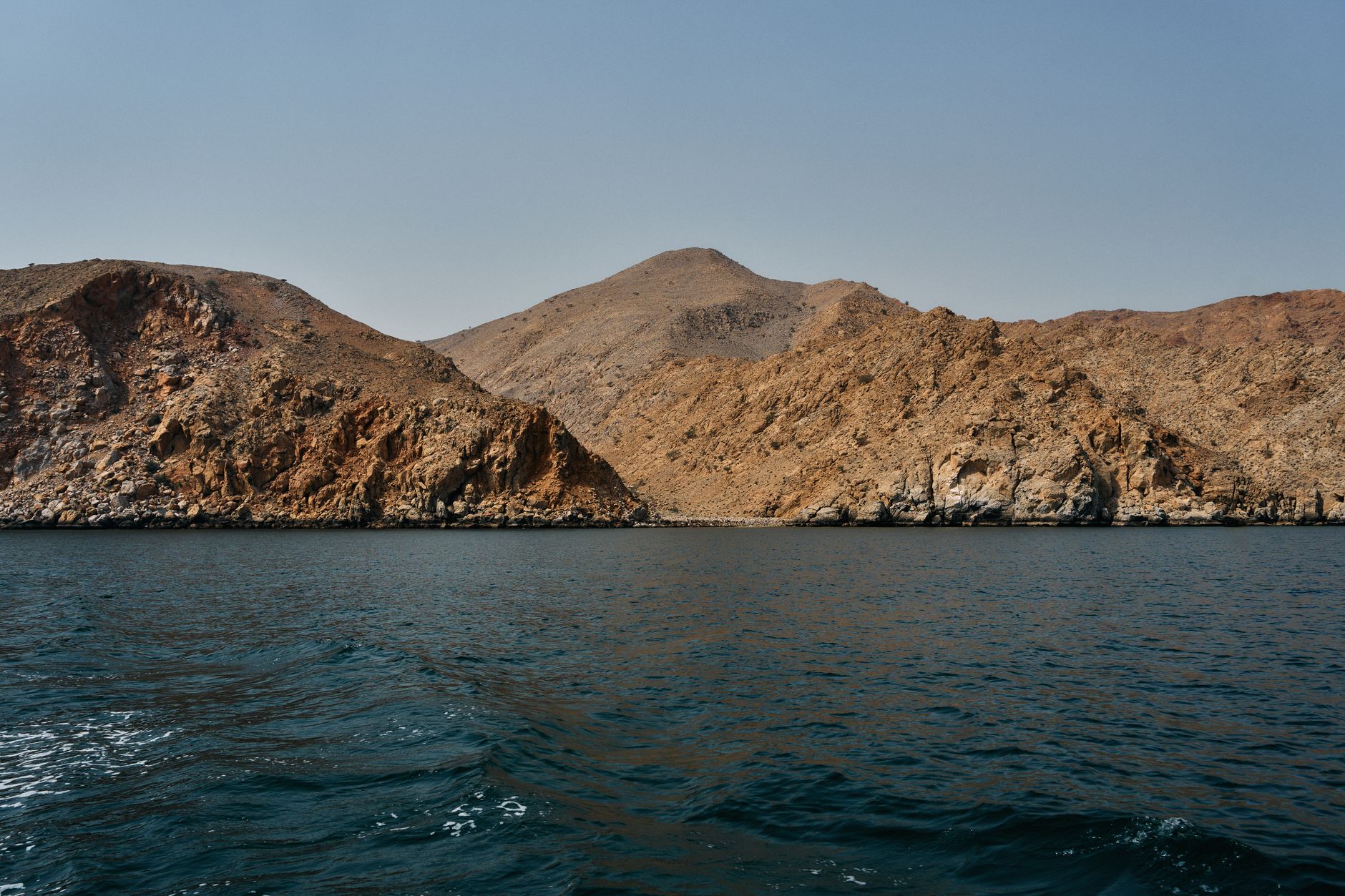 Materials
Hormuz Under Fire, Egyptian Capital Moves South, and the Quiet Erosion of UAE Developer Margins
Sep 11, 2026 Materials
Two Signals From the GCC Chemicals Chain: What SABIC's Dividend Cut and Fertiglobe's Profit Surge Reveal About the Region's Diverging Feedstock Economics
Sep 11, 2026 Materials
Saudi Cement Sector Earnings Reveal a Familiar Paradox: Volume Rises, Margins Compress
Sep 11, 2026